Biotin for hair and nails: the lab-test risk hidden behind beauty claims
Evidence for high-dose biotin beauty benefits is limited, while interference with thyroid, hormone, and cardiac tests is well documented.

High-dose biotin can distort important laboratory results even when it does not deliver the advertised hair or nail benefit.
Deficiency evidence is not beauty-product evidence
Biotin is an essential B vitamin and a cofactor for enzymes involved in fatty-acid, glucose, and amino-acid metabolism. True deficiency can include hair thinning, rash, and neurologic findings. Marketers often reverse that observation and imply that high-dose biotin improves hair and nails in anyone. Treating a deficiency, however, is not proof of benefit in people with adequate status.
ODS notes that biotin deficiency is rare and that evidence supporting supplements for hair, skin, and nails in healthy people is limited. Case reports in people with specific disorders are not equivalent to large randomized trials. Before attributing shedding or brittle nails to biotin, consider the many nutritional, endocrine, medication-related, dermatologic, and mechanical causes.

Beauty doses can dwarf nutritional intake
The adult adequate intake is measured in micrograms, while some beauty products provide several milligrams. Because one milligram equals 1,000 micrograms, the label can represent hundreds of times the adequate intake. The absence of an established upper limit does not mean every dose is proven useful or free from practical risk.
Biotin may appear in a multivitamin, B-complex, hair gummy, energy product, and prenatal supplement at the same time. Count all sources and record the exact amounts. A clinician who hears only that a patient takes a vitamin may not realize the exposure is high enough to interfere with an assay.
Why laboratory results can move in both directions
Many immunoassays use the strong binding between biotin and streptavidin as part of the measurement system. Extra biotin circulating in a blood sample can disrupt that design. Depending on the assay format, the result can appear falsely high or falsely low. The person’s underlying hormone or cardiac marker has not necessarily changed; the measurement has been distorted.
This is especially confusing because incorrect thyroid results can mimic a thyroid disorder and prompt additional testing or treatment. FDA has also warned about falsely low troponin results in some cardiac assays, which could be dangerous when evaluating a possible heart attack. The affected tests and thresholds differ by manufacturer, so a single universal washout rule is unreliable.
A small study demonstrated real interference
In a crossover study, six healthy adults took 10 milligrams of biotin daily for seven days. Researchers tested 37 immunoassays across four diagnostic systems. Interference appeared in 9 of 23 assays that used biotin-streptavidin components and in none of 14 assays that did not use that design.
The study was small, so it cannot estimate how often every patient or laboratory will be affected. It clearly demonstrates the mechanism in people taking a dose common in retail beauty supplements. Results varied by assay, reinforcing why patients should disclose the product rather than assume every thyroid panel or hormone test behaves the same way.
What to do before blood work
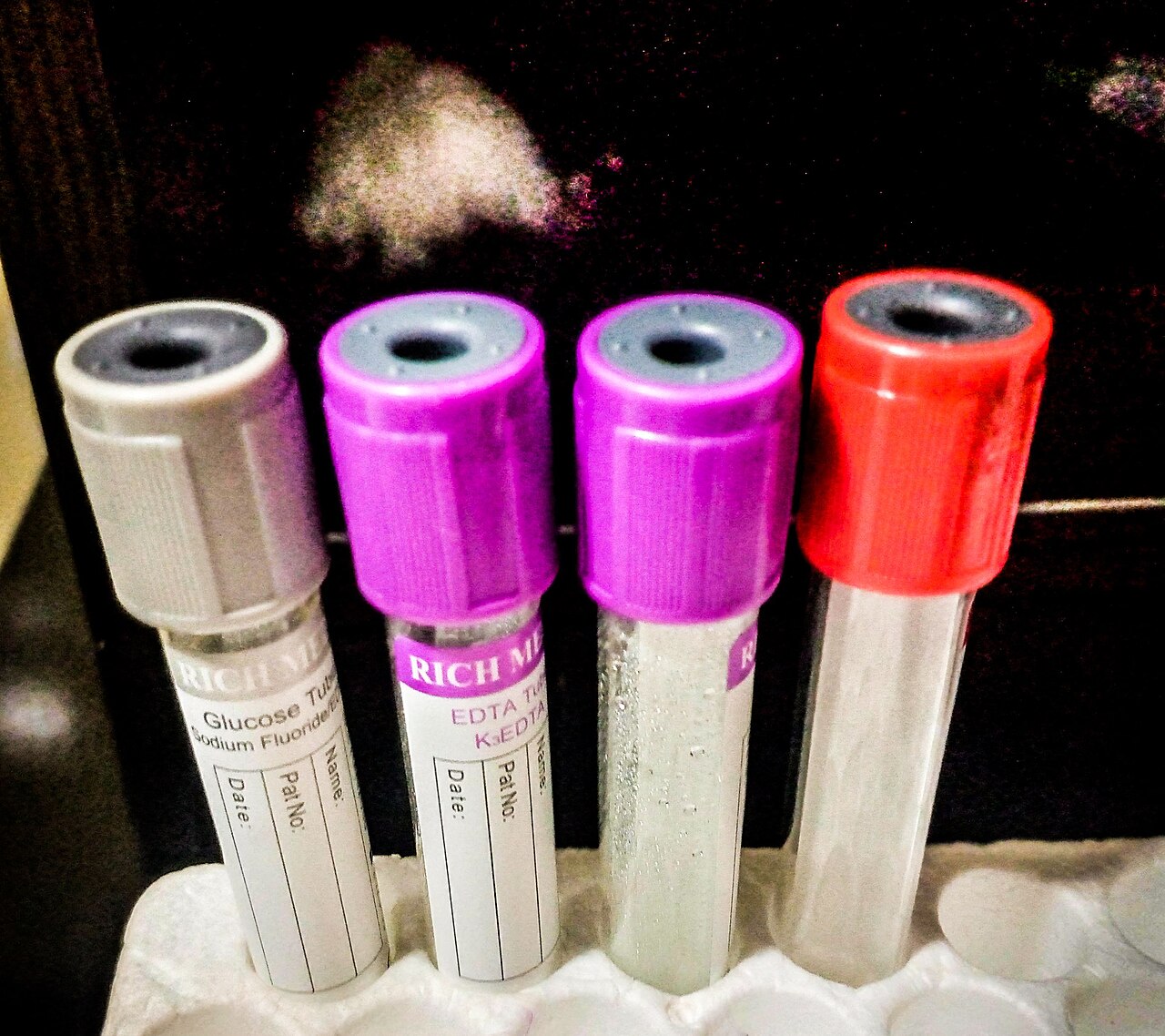
Tell the ordering clinician and the laboratory about biotin, including the dose and last time taken. Do not stop a prescribed product without guidance. The appropriate pause, repeat test, or alternative assay depends on dose, kidney function, urgency, and the laboratory platform. Emergency evaluation should never be delayed simply to clear a supplement.
For a routine beauty purchase, weigh the limited benefit evidence against the inconvenience and potential clinical consequences of distorted testing. Third-party certification may confirm that the capsule contains biotin, but it cannot prevent the molecule from interfering with a susceptible assay. Better labeling and full disclosure are more useful than assuming a water-soluble vitamin is invisible to medical testing.
Putting the evidence into practice
Timing advice found online often ranges from hours to days because elimination depends on dose and the test’s susceptibility. That variation is a warning against choosing a pause on your own. Laboratories can sometimes use a different platform, dilute a sample, or repeat testing after an appropriate interval when interference is suspected.
Hair loss itself can signal iron deficiency, thyroid disease, recent illness, rapid weight loss, androgen-related change, autoimmune disease, or scalp disorders. A high-dose beauty gummy may delay the useful evaluation while simultaneously distorting thyroid or hormone tests. Evidence-based care begins by identifying the cause rather than assuming the shared symptom proves biotin need.
Sources & further reading
This article is educational and does not diagnose, treat, or replace individual medical advice. Ask a qualified clinician or pharmacist about symptoms, medical conditions, and possible interactions before using supplements.