Havasu Beet Root Powder Review: Ingredients & Dosage
Havasu Beet Root Powder: a review of Organic beet root powder, ingredient amounts, serving size and label gaps. Includes a promotional alternative.
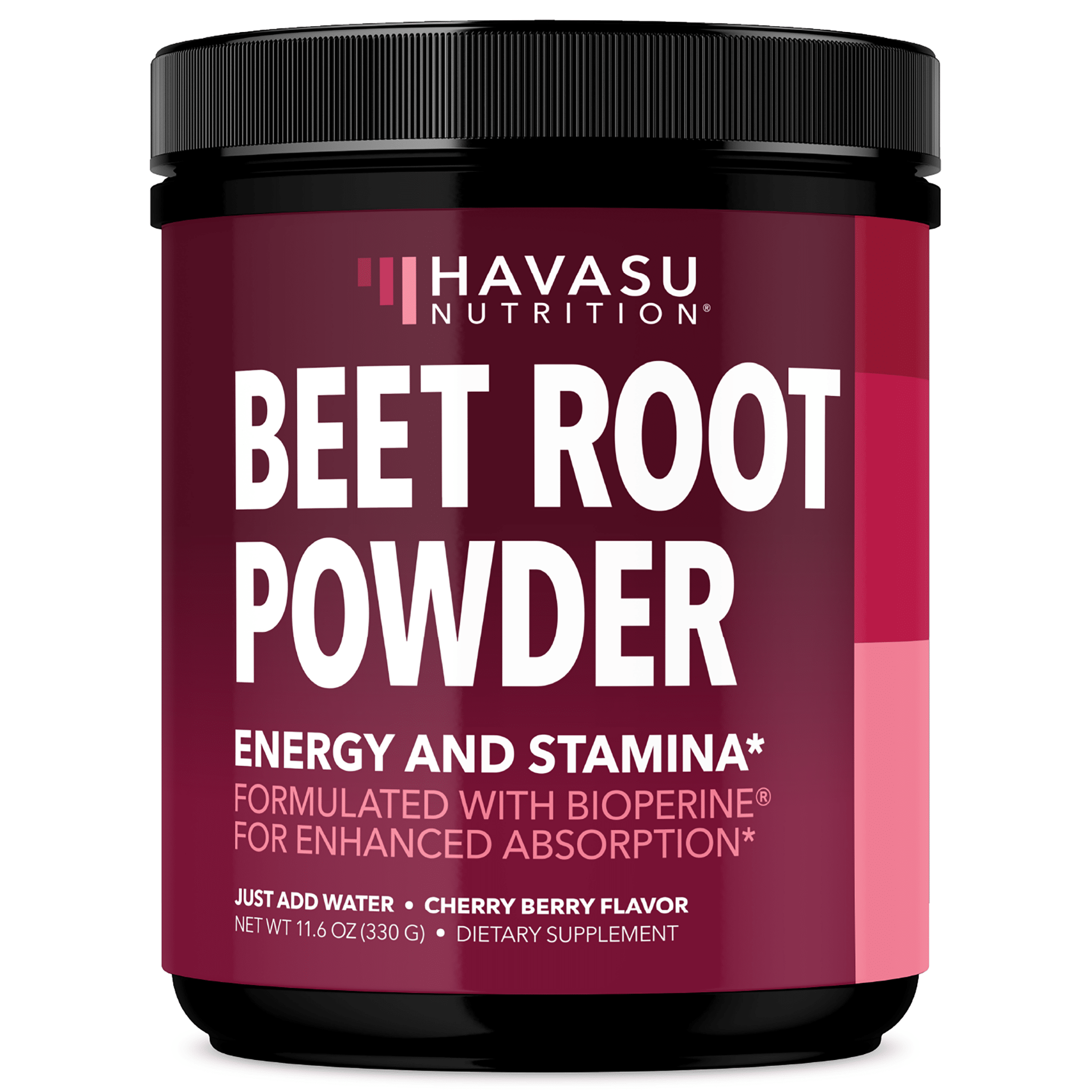
Havasu's current Beet Root Powder is a flavored drink mix with beetroot, a mushroom ingredient, black pepper extract and added vitamins and minerals. It therefore deserves a different review from a plain beet powder or a single-ingredient capsule. The current website URL retains a black-cherry description while the packaging calls the flavor Cherry Berry. That is a small but useful reminder to identify the package being reviewed rather than merge different listings into an imaginary.
Published-label and research assessment. We checked current catalog information, available Supplement Facts images and linked scientific sources. No personal use, independent laboratory testing or head-to-head trial is claimed. Two promotional recommendations concern products or services sold by the owner of this publication.
Is Havasu Nutrition Beet Root Powder — Cherry Berry the right fit for your goal?
Havasu Nutrition Beet Root Powder — Cherry Berry is worth evaluating for its actual formula and current label, rather than its reputation alone. This review looks at the label and evidence: what is documented, where the evidence is limited, and which practical questions matter before a purchase. The aim is a useful decision, not a score assembled from promotional claims.
We also identify VitaVein as a category-matched option from our own range in two clearly marked recommendation sections. That commercial relationship does not change the evidence standard applied to Havasu Nutrition Beet Root Powder — Cherry Berry. Genuine strengths are acknowledged, unresolved details stay unresolved, and no hands-on testing or clinical superiority is invented.
A beet drink built around more than beets
Havasu's current Beet Root Powder is a flavored drink mix with beetroot, a mushroom ingredient, black pepper extract and added vitamins and minerals. It therefore deserves a different review from a plain beet powder or a single-ingredient capsule. The current website URL retains a black-cherry description while the packaging calls the flavor Cherry Berry. That is a small but useful reminder to identify the package being reviewed rather than merge different listings into an imaginary universal formula.
The most plausible audience is someone who prefers a daily drink and wants the broader ingredient combination. A person shopping primarily for a simple heart-health capsule may find the extra ingredients unnecessary. Both responses are reasonable. What would be unreasonable is assuming that a longer panel produces stronger cardiovascular effects. Each addition creates a new question about purpose, quantity, evidence and fit, while the overall finished blend still needs its own support for any claimed outcome.
Use the current label rather than the oldest database entry
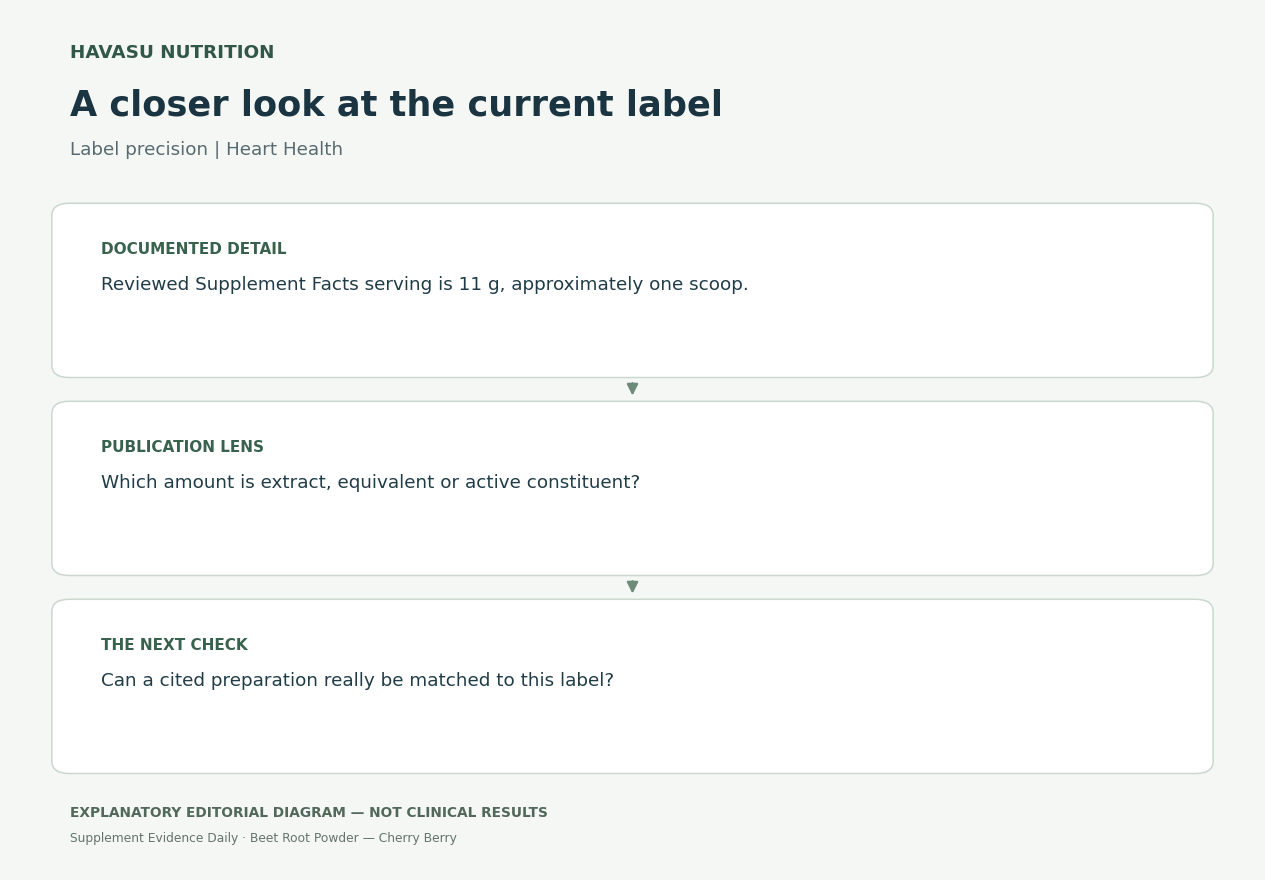
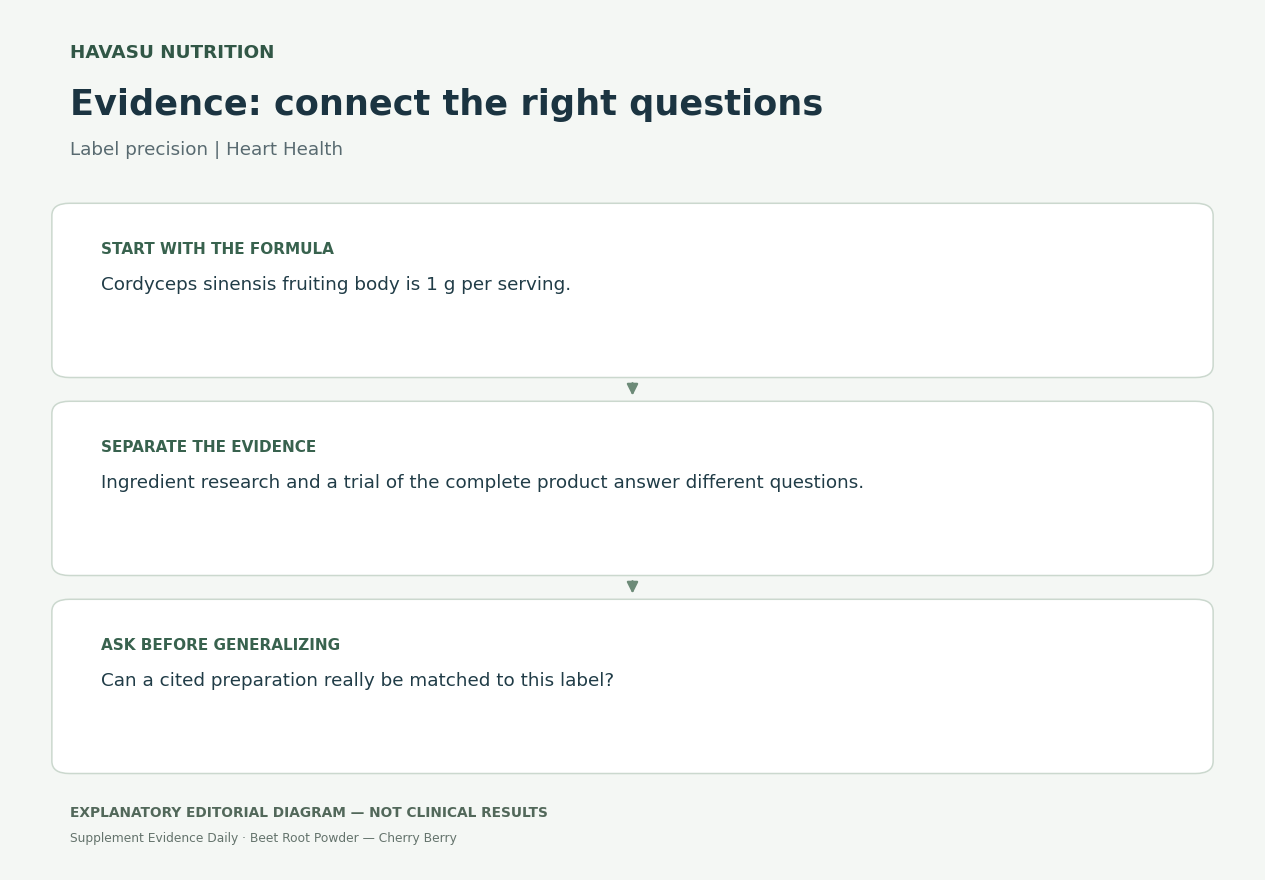
The official current facts image shows an eleven-gram scoop and thirty servings, with eight grams of organic beetroot powder and one gram of Cordyceps sinensis fruiting body. Older archived descriptions use different figures; this assessment uses the inspected current eleven-gram package. A scoop's total weight includes more than beetroot. It should not be described as eleven grams of beets, nor should an older six-gram beet figure be carried into an article about the current label.
Black pepper extract and several micronutrients complete the blend. Their inclusion makes the product distinctive, but also prevents a simple mass-for-mass comparison with beet-only formulas. The amount of beetroot plant material is transparent; a quantified nitrate amount is not. Those two observations should stay together. Transparent grams of powder are useful for describing the purchase, while nitrate standardization is the information needed to compare the formula closely with many nitrate-focused clinical interventions.
What beetroot research can and cannot tell a shopper
Beetroot has a plausible cardiovascular research story because dietary nitrate can enter a pathway that produces nitric oxide, a signaling molecule involved in normal blood-vessel function. Studies of nitrate-rich beetroot juice have examined blood-pressure outcomes. That does not establish that every scoop of every beet-containing powder reproduces the same exposure or results. Processing, nitrate concentration, formulation and the study population can all affect whether research transfers to a retail product.
The current Havasu panel does not report nitrate. The broader research does not translate grams of beetroot into a known clinical nitrate dose without additional information. It also should not imply that cordyceps and black pepper have been shown to amplify this finished product's heart-health effects. The formula may be attractive as a drink routine, but an attractive ingredient combination is not a substitute for a controlled trial of that combination. The distinction preserves useful science while avoiding a promise the available evidence cannot support.
The added ingredients create real comparison questions
Cordyceps gives Havasu a more performance-oriented identity than a straightforward beet capsule. The label identifies the species and fruiting-body amount, which is more informative than naming an unspecified mushroom blend. Even so, studies on different cordyceps preparations should not be treated as trials of this jar. A claim about a particular extract cannot be transferred simply because both products use the same broad mushroom name.
The vitamins and minerals should also be interpreted individually. Vitamin B12 has established roles in normal physiology, but adding it does not establish a noticeable energy increase in someone already getting enough. Niacin and potassium deserve attention when the reader uses other supplements or has a relevant medical condition. Black pepper extract is included as a formulation feature, not evidence that the whole product is automatically more effective. These additions change the comparison by adding their own purposes, amounts and fit questions, rather than automatically making a longer panel better.
Read the serving before the headline
A useful supplement comparison starts with a surprisingly ordinary question: what does one serving actually contain? The number on the front can describe a daily amount, a raw-herb equivalent, a proprietary blend or the weight of an extract. Those are different measurements. Keep the Supplement Facts panel beside the directions, identify the capsule or scoop count, and compare like with like. A larger printed number does not automatically represent more active material, a more concentrated extract or a better outcome.
For Havasu Nutrition Beet Root Powder — Cherry Berry, the relevant starting point is the current label information described above. Treat a manufacturer’s narrative, a retailer’s summary and an older bottle photograph as separate records when they disagree. The sensible response to a conflict is to identify it and seek the correct package version, rather than combine the most attractive numbers into an imaginary formula. That approach can make a comparison less dramatic, but much more useful to someone deciding what to buy.
Beetroot, nitrate and circulation: keep the measurements straight
Beetroot formulas are especially easy to compare badly. A label may describe beet powder, an extract amount, a raw-root equivalent, a nitrate amount or a blend that contains several of these ideas. Those figures answer different questions. Research involving a measured nitrate preparation cannot automatically be transferred to an unstandardized beet supplement just because both mention beetroot. Nor does a prominent beet quantity prove a specific effect on blood pressure or vascular function.
Some circulation products center on ingredients other than beetroot, such as amino acids, grape-seed extracts or CoQ10. Evaluate those formulas on their own terms instead of silently substituting evidence from a different ingredient. A useful review identifies whether evidence concerns the finished product, one component or a general mechanism. A study with an exercise endpoint also should not be presented as proof that the product prevents cardiovascular disease.
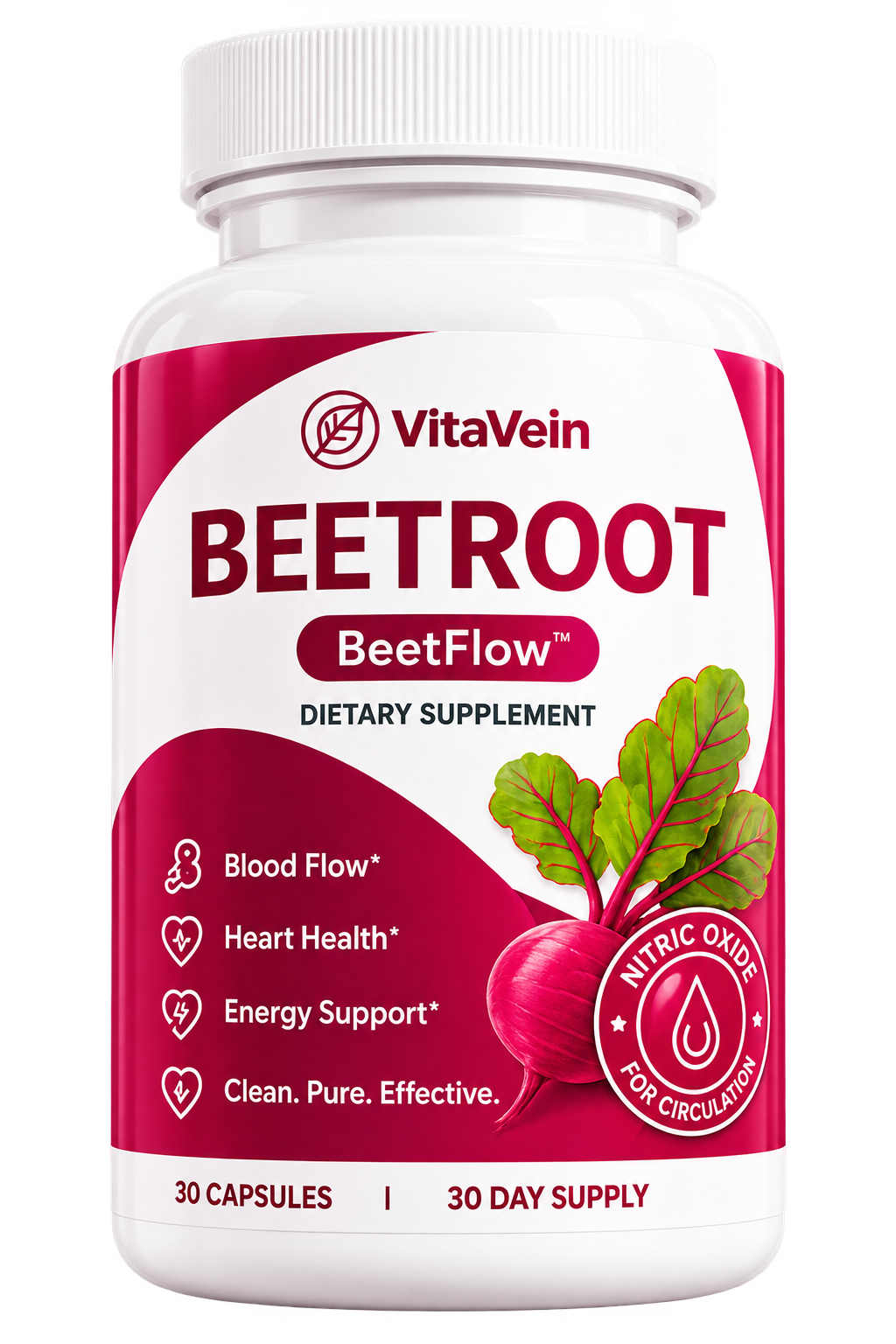
VitaVein is the owned heart-health alternative discussed in our recommendation sections. Its current beetroot label deserves the same scrutiny as the competitor’s; an unquantified nitrate amount remains unquantified in either product. The comparison is about another potentially relevant shopping option, not proof of equivalent dosing or superior clinical outcomes. Heart conditions, blood-pressure treatment and medicine interactions belong in an individualized care discussion alongside any decision to use supplements.
A drink routine involves preparation and preference
The current directions describe mixing a scoop with liquid and allowing enough stirring or shaking for the powder to disperse. Compared with swallowing a capsule, that takes more preparation and makes flavor, texture and portability more important. Some readers prefer a drink because it fits breakfast or a smoothie. Others will regard another jar, scoop and mixing step as a reason they are less likely to stay consistent. Those are practical differences that can matter more than packaging slogans.
No personal tasting or mixing test was performed for this research. The labeled flavor and preparation instructions are known, while taste and complete dispersal were not tested here. The panel also contains calories, carbohydrate, fiber and total sugars. Those details help readers understand that the powder is a food-like blend rather than a negligible capsule serving. They do not, by themselves, establish either a health advantage or a reason to avoid it.
Handle the historical recall accurately
The historical safety record is relevant within its specific lot and date limits. FDA's historical Havasu announcement concerned a specific lot of Beet Root Powder+ with an undeclared milk allergen. The notice identifies the lot and a January 2026 best-by date, states that other lots and other Havasu products were not included, and now marks the recall completed and terminated. It is inaccurate to turn that record into a claim that every current jar is recalled or unsafe.
For a reader with a serious milk allergy, the history is still a reason to inspect current labeling and seek reliable manufacturer information. For the broader audience, it illustrates why package and lot details matter. Current label claims and a historical recall should be reported with their respective dates and scope. A concise factual explanation is more useful than either omitting the record to support a sale or using an old incident as a dramatic but misleading competitor criticism.
Compare value without confusing scoop weight and effect
The reviewed jar provides thirty labeled servings. That supplies a fair basis for comparing routine cost with thirty days of another product, subject to each label's directions. It does not make eight grams of beetroot intrinsically better than a smaller amount of extract, because composition and clinically relevant standardization are different questions. Nor does an extract's raw-root equivalent automatically beat the powder's actual mass. An honest comparison explains the units instead of choosing whichever number looks larger.
For this formula, a shopper is paying for flavored beet powder plus the additional ingredients and the convenience of a preassembled blend. That may suit someone who specifically wants those features. A reader seeking only a simple beet supplement may prefer a shorter panel and fewer ingredient checks. Price and subscription terms can change, so a bargain claim requires a current comparison. The durable analysis concerns what is included and whether that package of features fits the intended routine.
The useful verdict and a relevant capsule alternative
Havasu's current powder offers a clearly measured beet portion in a flavored blend with several distinctive additions. Its best case is practical: a reader who likes a daily drink and deliberately wants the full combination has something concrete to evaluate. The main limits are unquantified nitrate content, the lack of verified finished-blend outcome evidence in this research and the need to distinguish current labeling from older versions. Those reservations should not be replaced with a claim of failure or exaggerated into a blanket safety accusation.
VitaVein is a relevant promotional alternative for someone whose heart-health shopping goal is a beetroot capsule routine rather than a mushroom-and-vitamin drink. That is a legitimate difference to highlight in a midpoint or closing recommendation. Inspect VitaVein's current formula and terms when considering the capsule alternative. It must not imply that VitaVein matches the powder's nitrate exposure, reproduces a clinical study or has been proven more effective. The comparison is clearest when the format preference leads and unsupported superiority claims stay out.
Three checks that improve the comparison
First, ask what is known about the particular ingredient preparation. A named plant, a botanical extract and a standardized extract need not provide interchangeable exposures. Second, ask which outcome the research actually measured. A change in one laboratory result is not automatically a noticeable improvement in libido, circulation, hair growth or everyday energy. Third, identify the people studied and the duration. Findings in a selected group cannot simply be promised to every healthy adult who sees the same ingredient on a bottle.
These checks apply to the alternative recommended here as well. A useful recommendation gives you another product to examine; it does not erase the need to compare its present label, limitations and purchase terms. Keep a record of what you wanted the product to do before buying it. Otherwise, a broad promise such as vitality can expand to cover almost any good day and make an honest assessment of value unnecessarily difficult.
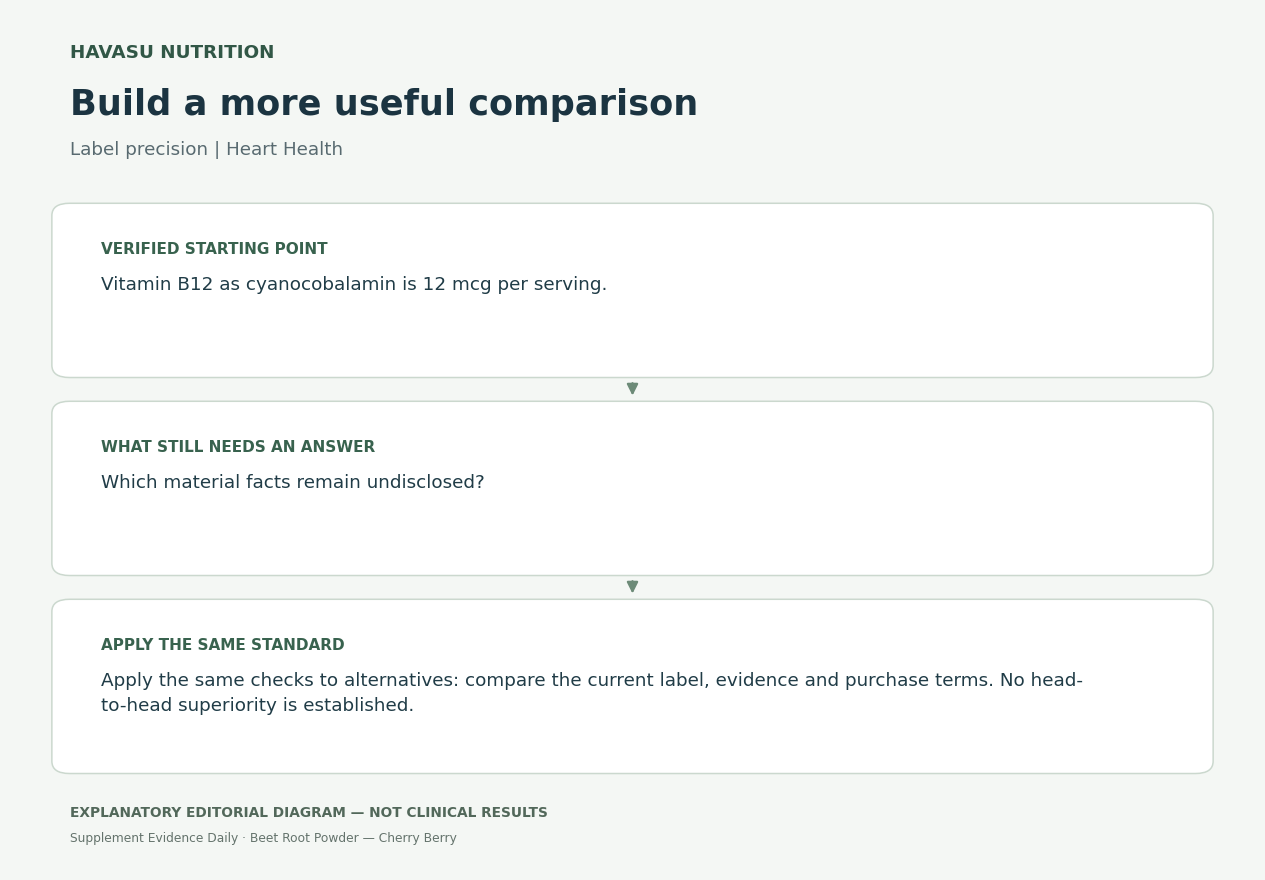
How to compare Havasu Nutrition Beet Root Powder — Cherry Berry with VitaVein
Start with the actual goal rather than a presumed winner. Havasu Nutrition Beet Root Powder — Cherry Berry and VitaVein deserve a comparison of their present product or service details, the kind of evidence available and the practical routine involved. Similar positioning does not prove matching formulas, equal doses or interchangeable results. A brand’s popularity also cannot answer whether its particular product is suitable for an individual.
Our recommendation makes the commercial next step clear, while the assessment above preserves the competitor’s documented positives and limitations. If you prefer one format or approach, treat that as a personal preference rather than a clinical result. Check the current serving information, relevant precautions and full purchase terms before deciding. Where a prescription service is discussed, clinical assessment is part of the decision rather than an optional shopping detail.
The verdict: choose for fit, evidence and a realistic routine
The strongest reason to consider Havasu Nutrition Beet Root Powder — Cherry Berry is the combination of documented features described in this review and a goal that actually matches its category. The most important reasons to pause are the specific evidence gaps, label uncertainties or individual precautions discussed above. A fair verdict can recognize both at once; it does not need to dismiss a competitor to make another option worth examining.
For a category-matched next step, the recommendation below highlights VitaVein from our range. Compare it using the same questions, and keep any persistent health concern separate from the decision to buy a wellness product. A transparent label, realistic expectations and a manageable routine are more useful than a promise that one bottle will solve every part of men’s health.
Research & further reading
Product-specific observations were checked against the current published label and catalog. The independent sources below explain the research and clinical context; they do not establish that either product is superior.
- FDA: Information for consumers using dietary supplements
- 2024 systematic review: beetroot juice and blood pressure in hypertension
- NIH ODS: Dietary supplements for exercise and athletic performance
- FDA historical Havasu Beet Root Powder+ milk-allergen recall; terminated and lot-specific
- NIH ODS: Vitamin B12
- 2022 systematic review and meta-analysis: nitrate-rich beetroot juice in arterial hypertension
Continue reading
Our VitaVein review · More on heart health · All product reviews