Nature's Craft N.O. Rush — 60 Capsules Review: Ingredients & Dosage
Nature's Craft N.O. Rush — 60 Capsules: a review of L-arginine base, ingredient amounts, serving size and label gaps. Includes a promotional alternative.
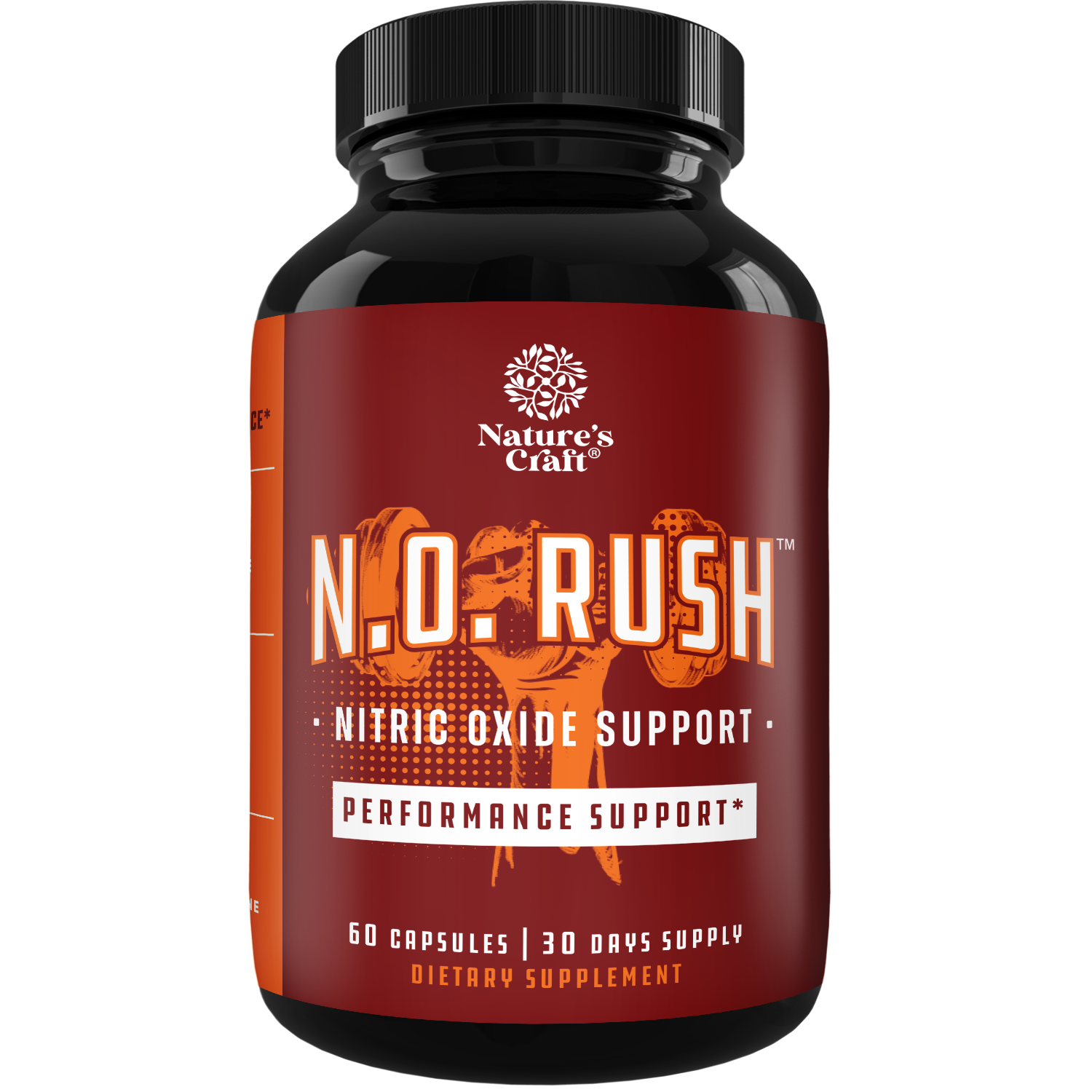
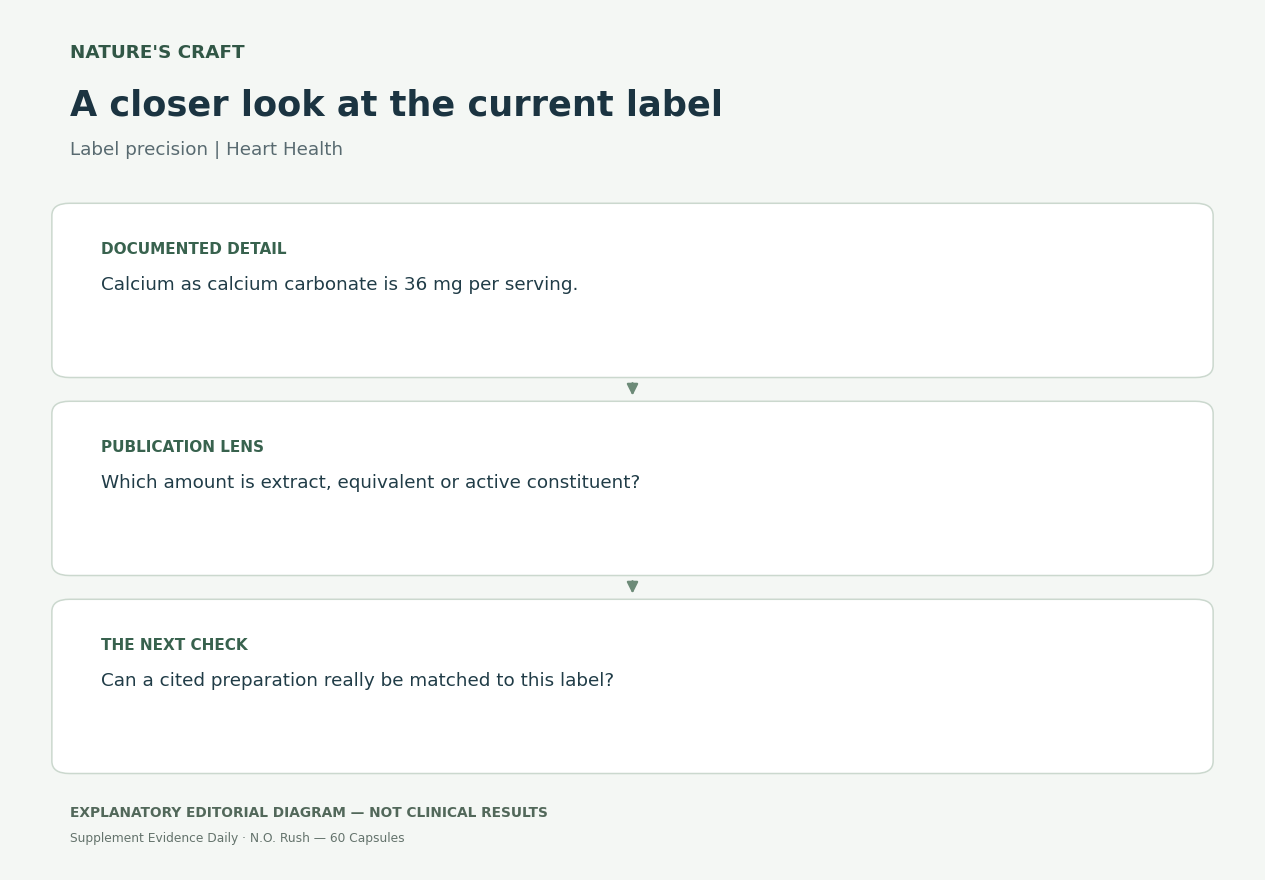
Nature's Craft N.O. Rush is marketed as a nitric-oxide and performance supplement, but the current official materials need careful reading. The inspected contemporary Supplement Facts image lists an amino-acid formula with niacin, calcium and beta alanine. It does not list beetroot. The website's descriptive copy still mentions beet powder, and older third-party label records show a different composition. Those sources cannot responsibly be combined into one supposedly verified current formula.
Published-label and research assessment. We checked current catalog information, available Supplement Facts images and linked scientific sources. No personal use, independent laboratory testing or head-to-head trial is claimed. Two promotional recommendations concern products or services sold by the owner of this publication.
Is Nature's Craft N.O. Rush — 60 Capsules the right fit for your goal?
Nature's Craft N.O. Rush — 60 Capsules is worth evaluating for its actual formula and current label, rather than its reputation alone. This review looks at the label and evidence: what is documented, where the evidence is limited, and which practical questions matter before a purchase. The aim is a useful decision, not a score assembled from promotional claims.
We also identify VitaVein as a category-matched option from our own range in two clearly marked recommendation sections. That commercial relationship does not change the evidence standard applied to Nature's Craft N.O. Rush — 60 Capsules. Genuine strengths are acknowledged, unresolved details stay unresolved, and no hands-on testing or clinical superiority is invented.
Start with the label discrepancy, not a sweeping verdict
Nature's Craft N.O. Rush is marketed as a nitric-oxide and performance supplement, but the current official materials need careful reading. The inspected contemporary Supplement Facts image lists an amino-acid formula with niacin, calcium and beta alanine. It does not list beetroot. The website's descriptive copy still mentions beet powder, and older third-party label records show a different composition. Those sources cannot responsibly be combined into one supposedly verified current formula.
This discrepancy is the most important product-specific finding because it affects almost every comparison. A reader interested in beetroot should not buy on the assumption that the current pictured version necessarily contains it. A reader interested in amino-acid quantities should not be given older figures from another panel. The current pictured version is the basis for this assessment, and confirming the delivered package with the manufacturer is worthwhile because the official description and image conflict. That is more informative than either ignoring the conflict or treating it as proof of misconduct.
What the current pictured formula says
The current official image identifies a two-capsule serving and thirty servings in a sixty-count bottle. It discloses separate quantities of two arginine forms, two citrulline forms, beta alanine, niacin and calcium. Individual disclosure is useful because it allows a shopper to see what is actually being offered rather than infer the shares of a proprietary blend. It also allows reviewers to compare the correct ingredient forms rather than lump every amino-acid-related number together.
Different forms should not be counted carelessly. A quantity of an amino-acid salt or an extract is not automatically identical to that quantity of the free amino acid. The current panel should be described in its own terms. Likewise, combining the two citrulline entries into a dramatic headline without explaining their forms can give a misleading impression of research-dose equivalence. The exact ingredient forms matter when comparing the amounts with published research.
Nitric oxide is a mechanism, not an outcome guarantee
Arginine and citrulline are relevant to the body's nitric-oxide pathways, which helps explain their use in circulation and performance marketing. The biological story is a starting point for research. It does not mean every oral formula containing them reliably improves stamina, erections or blood pressure. An ingredient's normal role differs from clinical results obtained with a specific supplement, amount, schedule and group of participants.
NIH's exercise-supplement overview is particularly useful for evaluating performance claims with restraint. It describes limited support for several commonly promoted ingredients and emphasizes uncertainty rather than a universal response. Trials using gram quantities of an ingredient do not automatically validate a lower-dose, multi-ingredient capsule formula. No finished-product randomized trial was verified for the current pictured N.O. Rush in this research. The biological rationale is understandable, while finished-product outcome evidence for the current pictured formula was not established in this research.
The category match is circulation, not beetroot equivalence
N.O. Rush may enter a heart-health comparison because it is marketed around nitric oxide and circulation, but its current pictured formula is not a direct beetroot equivalent. That matters when introducing VitaVein. The comparison would be between different approaches in a broad circulation-support market: an amino-acid/performance blend on one side and a beetroot capsule on the other. It would not be a simple comparison of two products supplying the same active ingredient or nitrate dose.
Sports-oriented claims about circulation do not establish cardiovascular treatment or sexual-enhancement outcomes. Marketing about a workout pump, endurance or a more muscular appearance does not establish treatment of erectile dysfunction or clinically meaningful changes in blood pressure. Keeping those goals separate helps readers understand why a product appears in the comparison and what it is actually designed to offer. If the intended reader wants a beet supplement specifically, the lack of beet in the pictured current panel is a practical decision point.
Read the serving before the headline
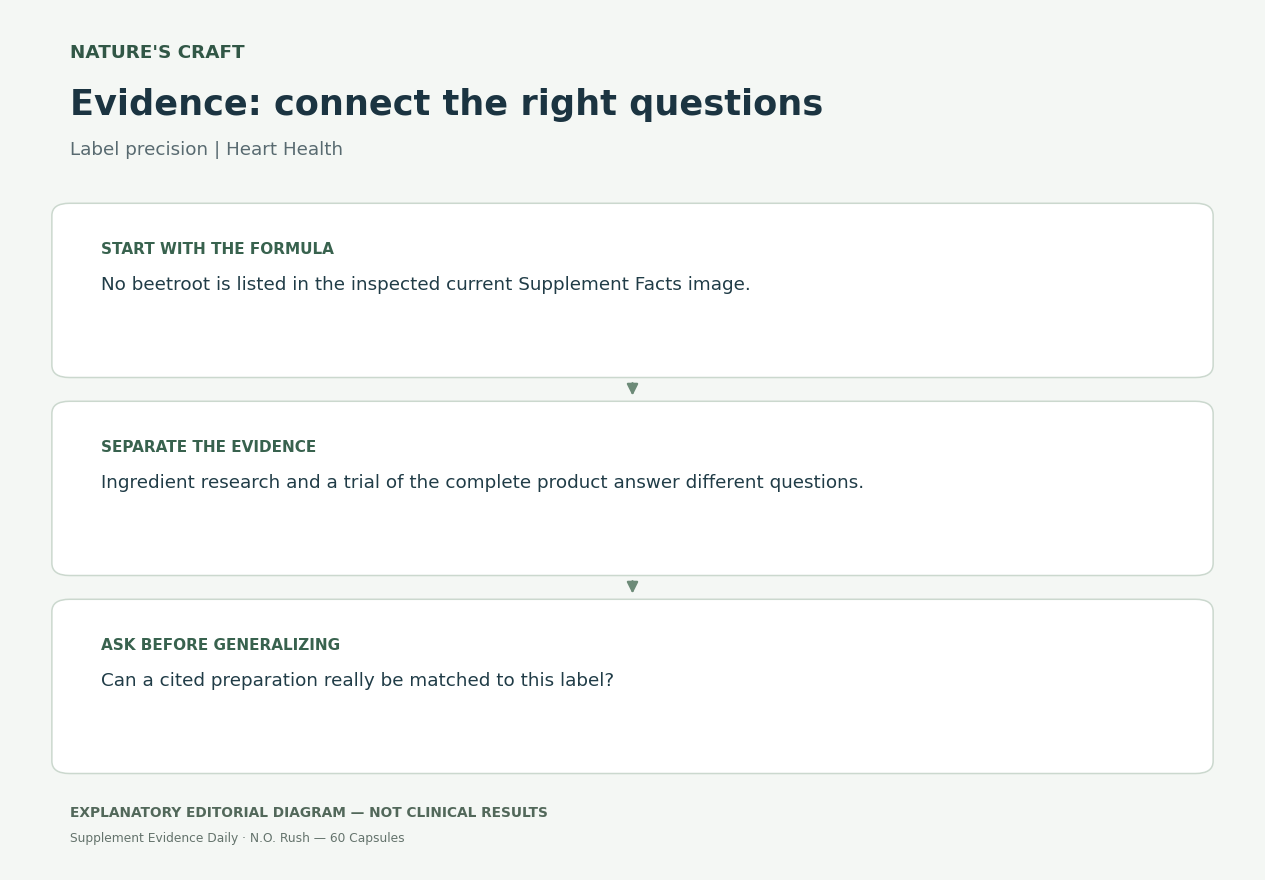
A useful supplement comparison starts with a surprisingly ordinary question: what does one serving actually contain? The number on the front can describe a daily amount, a raw-herb equivalent, a proprietary blend or the weight of an extract. Those are different measurements. Keep the Supplement Facts panel beside the directions, identify the capsule or scoop count, and compare like with like. A larger printed number does not automatically represent more active material, a more concentrated extract or a better outcome.
For Nature's Craft N.O. Rush — 60 Capsules, the relevant starting point is the current label information described above. Treat a manufacturer’s narrative, a retailer’s summary and an older bottle photograph as separate records when they disagree. The sensible response to a conflict is to identify it and seek the correct package version, rather than combine the most attractive numbers into an imaginary formula. That approach can make a comparison less dramatic, but much more useful to someone deciding what to buy.
Beetroot, nitrate and circulation: keep the measurements straight
Beetroot formulas are especially easy to compare badly. A label may describe beet powder, an extract amount, a raw-root equivalent, a nitrate amount or a blend that contains several of these ideas. Those figures answer different questions. Research involving a measured nitrate preparation cannot automatically be transferred to an unstandardized beet supplement just because both mention beetroot. Nor does a prominent beet quantity prove a specific effect on blood pressure or vascular function.
Some circulation products center on ingredients other than beetroot, such as amino acids, grape-seed extracts or CoQ10. Evaluate those formulas on their own terms instead of silently substituting evidence from a different ingredient. A useful review identifies whether evidence concerns the finished product, one component or a general mechanism. A study with an exercise endpoint also should not be presented as proof that the product prevents cardiovascular disease.
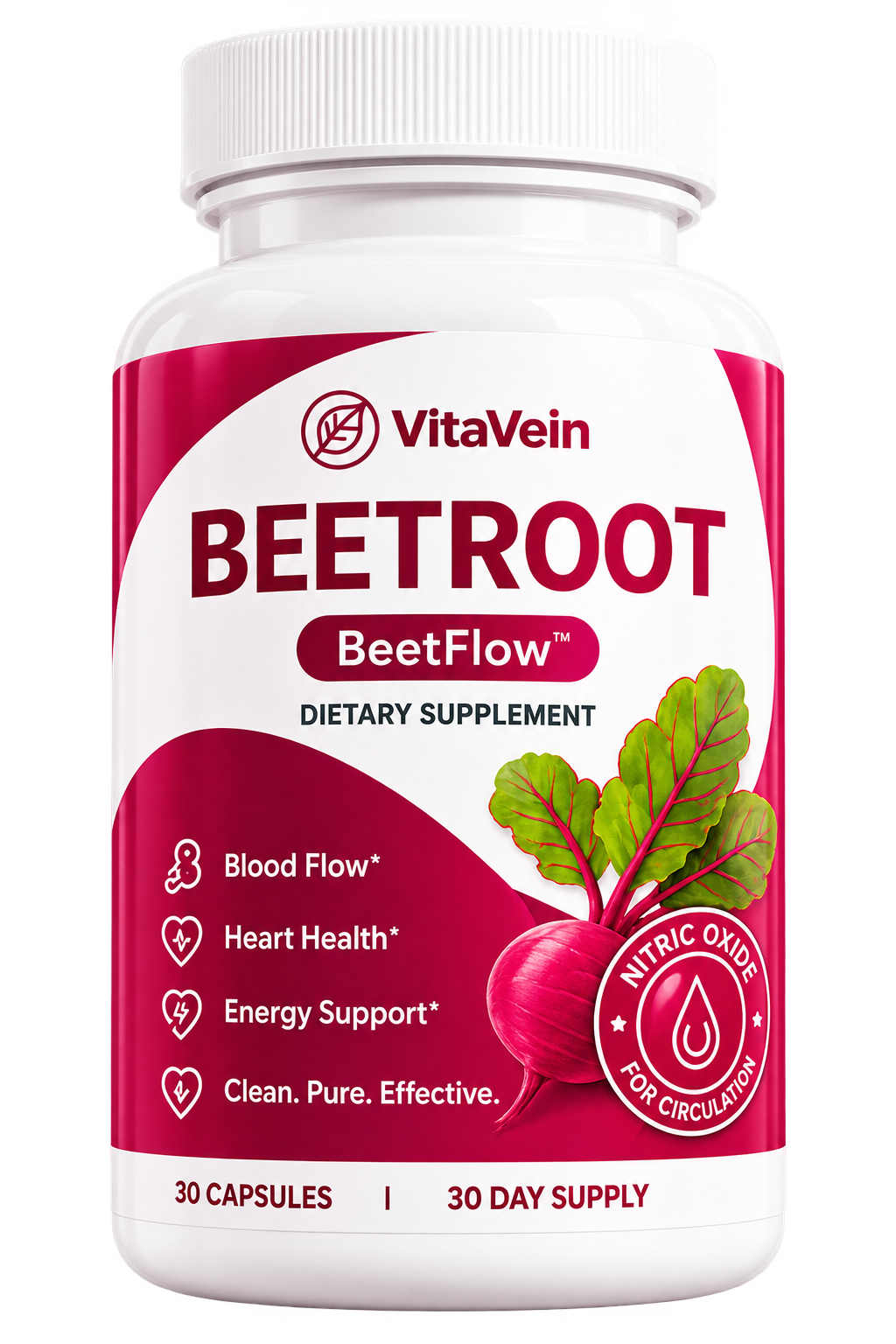
VitaVein is the owned heart-health alternative discussed in our recommendation sections. Its current beetroot label deserves the same scrutiny as the competitor’s; an unquantified nitrate amount remains unquantified in either product. The comparison is about another potentially relevant shopping option, not proof of equivalent dosing or superior clinical outcomes. Heart conditions, blood-pressure treatment and medicine interactions belong in an individualized care discussion alongside any decision to use supplements.
Capsule convenience and formulation transparency
A two-capsule product can be convenient for readers who do not want a flavored drink or a scoop-based pre-workout. There is no mixing step, and the current panel names its ingredients individually. Those are legitimate reasons to consider it, even when the clinical case remains incomplete. No hands-on swallowing or personal-outcome test was performed, so a rapid pump or noticeable effect cannot be reported from experience. Label research is useful, but it is not hands-on testing.
The main transparency problem is the disagreement among the company's own description, its current image and older records. The exact current package matters more than broad descriptions such as advanced formula when the sources disagree. Manufacturers can reformulate products, and databases can retain older labels. The reader needs to know that a review written about one label does not necessarily describe every bottle sold under the same product name over time.
Safety questions follow the actual ingredient panel
Niacin, amino-acid ingredients and beta alanine should be considered in the context of other supplements and medicines. A shopper may already use a multivitamin or pre-workout that overlaps with the formula. Counting the full routine is more useful than evaluating each product as if nothing else were being taken. The current package warning and a clinician or pharmacist can help determine whether a new supplement fits an individual's conditions and prescriptions.
The practical issue is fit with the complete routine and any relevant medicines or conditions. It should not imply that every listed ingredient is dangerous, and it should not describe a capsule as risk-free because it is a supplement. Nor should it promise that taking a product before exercise makes it an appropriate choice for someone with concerning symptoms. A formula marketed around circulation is not a substitute for assessing persistent fatigue, exercise intolerance or erectile difficulties. The same standard should apply to the promoted alternative so that the comparison does not use safety selectively as a sales tactic.
Value depends on getting the version you expect
The current pictured sixty-capsule bottle represents thirty two-capsule servings. That is the basic unit for a cost comparison. However, no price calculation resolves a formula discrepancy. A reader who wants particular ingredients should first confirm the current delivered label, then compare cost per labeled serving, one-time versus subscription terms and whether the ingredients overlap with products already in use. Buying a discounted bottle is not good value if it is a different formula from the one expected.
The product's individually disclosed amounts are helpful once the version is clear. They allow a more meaningful discussion than merely counting the number of actives or using a nitric-oxide headline as a proxy for potency. They also make it possible for the reader to decide that the formula is not the desired type of supplement. Those preferences can support choosing a different product without requiring a manufactured numerical score or a claim about every competitor.
An honest conditional verdict
N.O. Rush has practical strengths as a capsule-based, individually disclosed amino-acid formula, alongside an unresolved official-source mismatch. The current pictured panel and the website description do not tell exactly the same story. That is a reason to be cautious about a definitive current-formula claim, particularly a claim that the product contains beetroot. The absence of a verified finished-product trial limits certainty about performance or circulation outcomes.
VitaVein can be presented as a separate promotional choice for readers whose actual goal is a beetroot capsule in the heart-health category. Inspect the current VitaVein label to see whether a beetroot capsule better matches that preference. Ingredient equivalence, a superior nitrate dose and better clinical results have not been established by the available comparison. The useful contrast is a preference for a beet-focused routine over the amino-acid/performance design pictured for N.O. Rush, with each product judged by its own verified formula and evidence.
Three checks that improve the comparison
First, ask what is known about the particular ingredient preparation. A named plant, a botanical extract and a standardized extract need not provide interchangeable exposures. Second, ask which outcome the research actually measured. A change in one laboratory result is not automatically a noticeable improvement in libido, circulation, hair growth or everyday energy. Third, identify the people studied and the duration. Findings in a selected group cannot simply be promised to every healthy adult who sees the same ingredient on a bottle.
These checks apply to the alternative recommended here as well. A useful recommendation gives you another product to examine; it does not erase the need to compare its present label, limitations and purchase terms. Keep a record of what you wanted the product to do before buying it. Otherwise, a broad promise such as vitality can expand to cover almost any good day and make an honest assessment of value unnecessarily difficult.
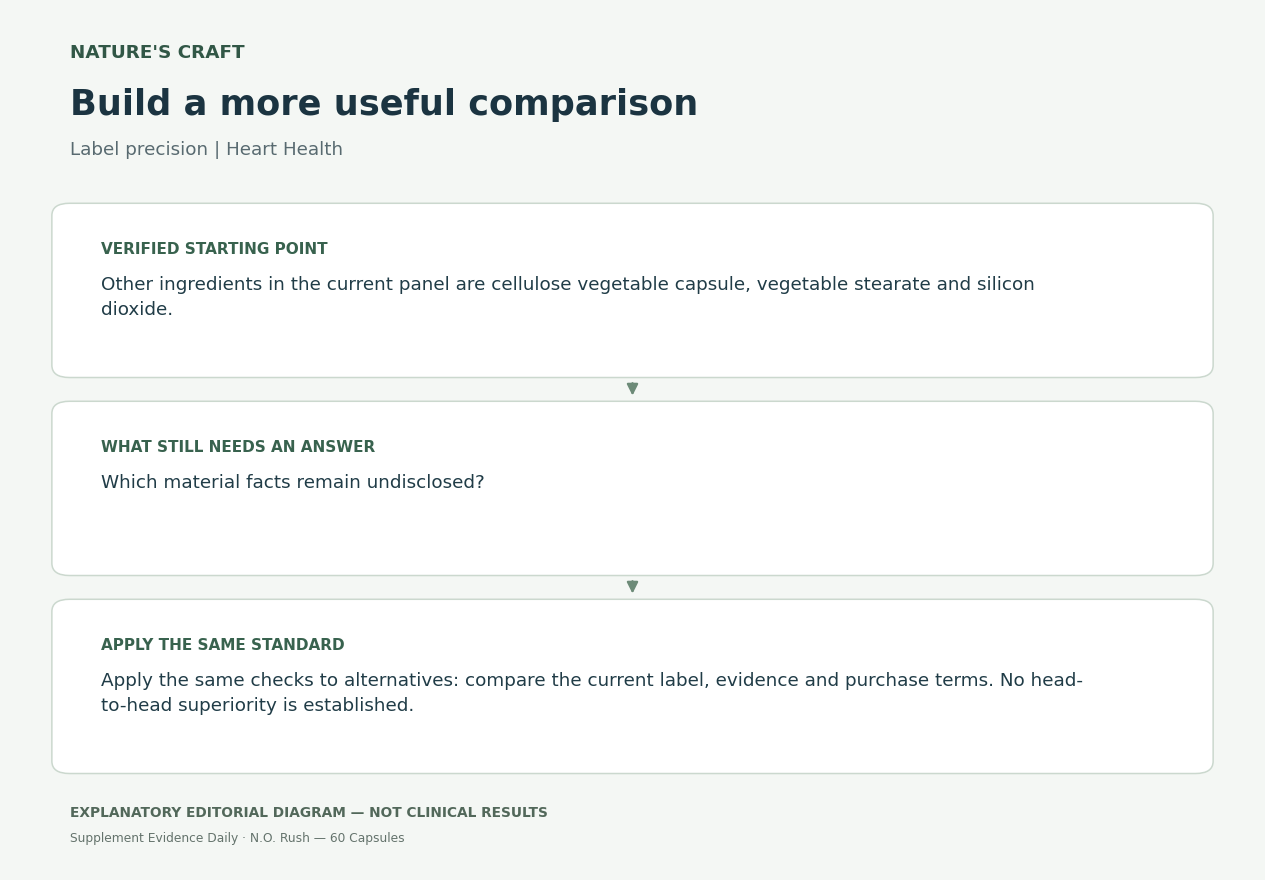
How to compare Nature's Craft N.O. Rush — 60 Capsules with VitaVein
Start with the actual goal rather than a presumed winner. Nature's Craft N.O. Rush — 60 Capsules and VitaVein deserve a comparison of their present product or service details, the kind of evidence available and the practical routine involved. Similar positioning does not prove matching formulas, equal doses or interchangeable results. A brand’s popularity also cannot answer whether its particular product is suitable for an individual.
Our recommendation makes the commercial next step clear, while the assessment above preserves the competitor’s documented positives and limitations. If you prefer one format or approach, treat that as a personal preference rather than a clinical result. Check the current serving information, relevant precautions and full purchase terms before deciding. Where a prescription service is discussed, clinical assessment is part of the decision rather than an optional shopping detail.
The verdict: choose for fit, evidence and a realistic routine
The strongest reason to consider Nature's Craft N.O. Rush — 60 Capsules is the combination of documented features described in this review and a goal that actually matches its category. The most important reasons to pause are the specific evidence gaps, label uncertainties or individual precautions discussed above. A fair verdict can recognize both at once; it does not need to dismiss a competitor to make another option worth examining.
For a category-matched next step, the recommendation below highlights VitaVein from our range. Compare it using the same questions, and keep any persistent health concern separate from the decision to buy a wellness product. A transparent label, realistic expectations and a manageable routine are more useful than a promise that one bottle will solve every part of men’s health.
Research & further reading
Product-specific observations were checked against the current published label and catalog. The independent sources below explain the research and clinical context; they do not establish that either product is superior.
- FDA: Information for consumers using dietary supplements
- NIH ODS: Dietary supplements for exercise and athletic performance
- Systematic review of oral citrulline and blood pressure: intervention differences and limitations
- Randomized trial of arginine with no blood-pressure effect in healthy participants
- NCCIH: Asian ginseng evidence and safety
Continue reading
Our VitaVein review · More on heart health · All product reviews